
Head of School
Emily McCaren
Keystone Academy Beijing

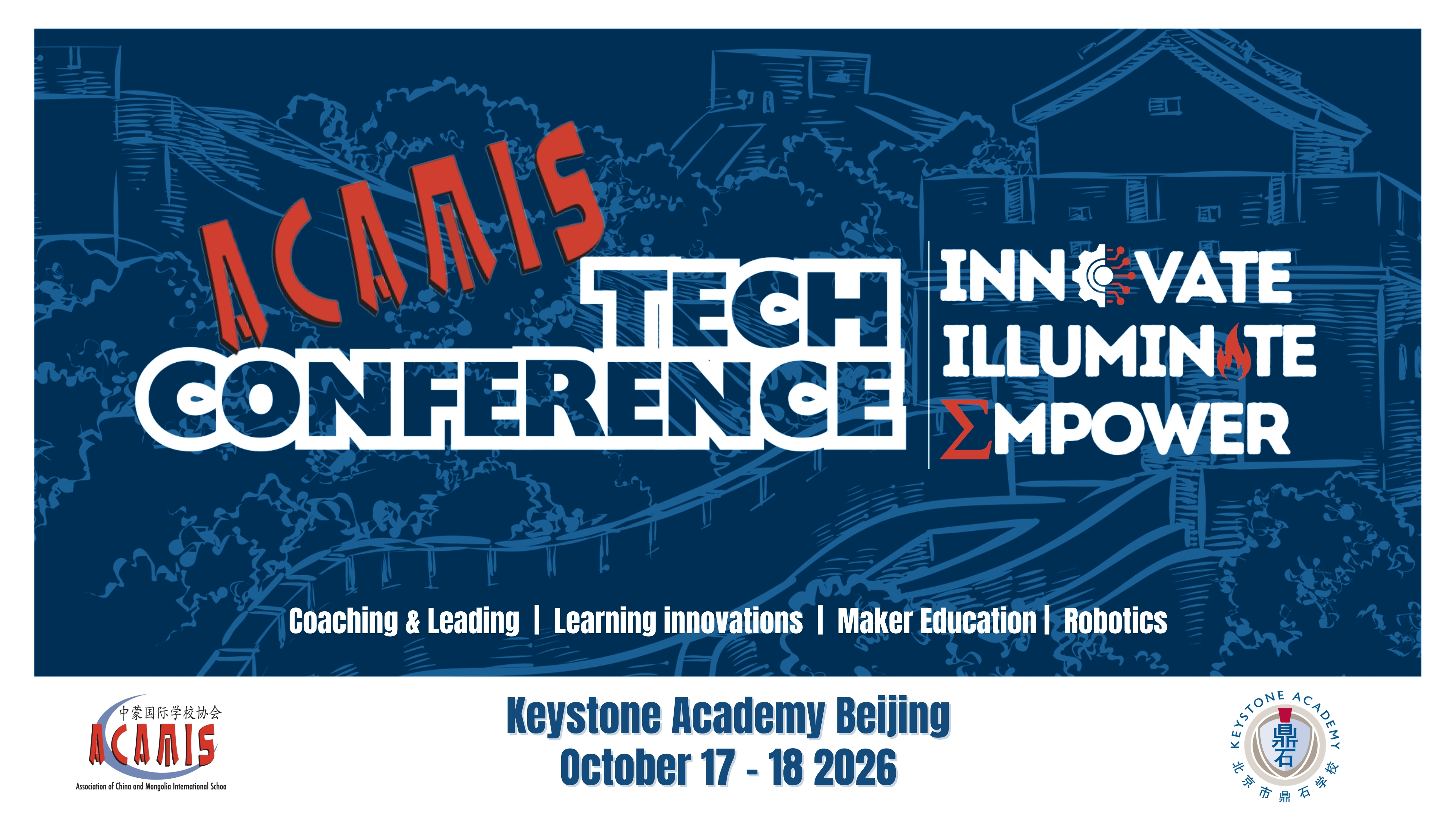
What happens when educators come together to push the boundaries of what's possible? Innovation is sparked. Strengths and passions are illuminated. Learners are empowered.
Join us at the ACAMIS Technology Conference 2026 on October 17–18 at Keystone Academy Beijing, where together we will explore how technology can transform learning and amplify student voice. Engage in dynamic sessions on robotics, AI integration, maker education, and creative problem-solving. Connect with fellow educators who are passionate about designing learning experiences that celebrate each student's unique potential. Leave with fresh ideas, new collaborations, and the inspiration to create experiences where innovation thrives and every learner is empowered to lead.
This year let's embrace innovation, illuminate brilliance, and empower others together!
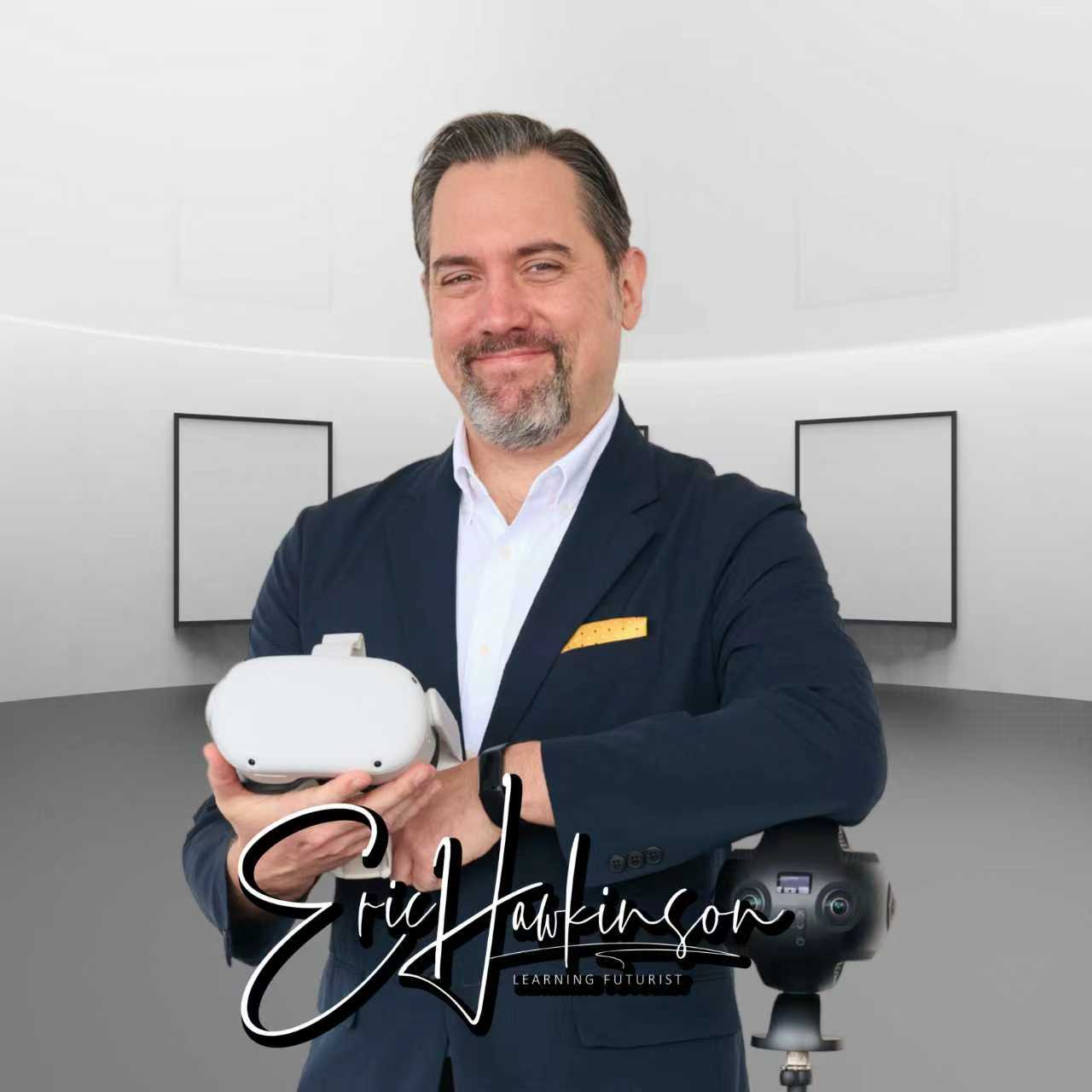
Current Position: Professor and Researcher at Kyoto University of Foreign Studies
Career: Professor, Research Coordinator, Founder, Developer, Community Leader, Chair, Author
Eric is a learning futurist, tinkering with and designing technologies that may better inform the future of teaching and learning. Eric is president and research coordinator of MAVR, a research group working in immersive technologies for teaching and learning, and more specifically, augmented and virtual realities in language learning. Eric's day job is at the Kyoto University of Foreign Studies where he teaches courses and conducts research on issues related to technology in tourism and education. Eric's projects have included augmented tourism rallies, AR community art exhibitions, mixed reality escape rooms, and other experiments in immersive technology.ric is a learning futurist, tinkering with and designing technologies that may better inform the future of teaching and learning.
From Digital Literacy to Digital Citizenship: The Choices We All Need to Be Making Before AI Decides for Us
Generation X, my generation, walked into the internet age without a guidebook, and we are still living with the consequences: misinformation, eroded trust, a youth mental health crisis no one planned for. Now AI is arriving faster and with higher stakes. This time, we have little excuse. Drawing on a decade of building digital citizenship curriculum across K-12 and university settings in Japan, including the textbook and global course Digital Citizenship and Engagement: Your Digital Identities, Our Shared Realities, Eric Hawkinson argues that teaching students to use digital tools is not the same as teaching them to understand their relationship with those tools. Digital literacy asks whether students can operate the technology. Digital citizenship asks whether they can engage with it responsibly, think critically about who benefits from its design, and recognize when they are being nudged, funneled, or quietly made dependent. As AI agents begin handling more of the operational tasks we once taught as "skills," the goal must shift from literacy to competency, developing students who are active digital citizens rather than passive digital consumers. In this session, Eric shares a progressive framework that moves learners from understanding their own digital identity, to examining personal habits around privacy and wellbeing, to investigating how digital systems shape communities and economies, and finally to taking informed action as advocates and leaders. No one knows exactly where this is heading, but a generation of strong global digital citizenship values might be better equipped to navigate it together.
Step Into My World: Your Hometown Is the Curriculum with Student-Led Storytelling in AR and VR
What happens when students become the tour guides of their own lives? In this hands-on workshop, participants will explore two award-winning projects that use immersive technology to turn personal storytelling into global learning. The My Hometown Project invites students to create VR tours of the places they grew up, sharing the memories, traditions, and small details that make a community unique. What started as a classroom experiment in Kyoto in 2016 has grown into a global network connecting students across Asia, Europe, and beyond, offering a meaningful alternative to traditional exchange programs by letting learners travel the world through each other's eyes. Reality Labo is an augmented reality platform designed for educators, enabling teachers and students to connect digital content to physical spaces, from enhanced textbooks and gamified campus experiences to collaborative community art walls where students share their hopes and goals through AR-linked video testimonials. Together, these tools show how immersive technology can amplify student voice rather than replace it. Participants will experience both platforms firsthand, discuss practical integration models for K-12 settings, and leave with a concrete plan for bringing immersive cultural exchange into their own schools. No prior AR/VR experience is required.
What Do We Owe the Next Generation? A Collaborative Reflection Wall
Inspired by the Japanese tradition of ema, the wooden tablets left at shrines for prayer, remembrance, and guidance, and by Candy Chang's global public art project Before I Die, this installation creates a quiet, reflective space in the exhibition area where conference participants can engage with the themes of the conference on their own terms. Visitors are invited to respond to simple prompts on cards and tie them to a display structure, building a growing, visible collection of educator voices over the two days of the conference. Prompts connect directly to the keynote themes of digital citizenship, student agency, and the choices educators face in an AI-driven world. Examples might include: "Before AI changes everything, I want my students to know... " or "The one thing I wish someone had taught me about technology is... " or "Innovation in my classroom means..."
As the installation grows, it becomes a living artifact of the conference itself, a place to pause between sessions, read what colleagues are thinking, and find unexpected common ground with educators from across the region. Eric Hawkinson will be present at the installation throughout the conference to facilitate conversation, help interpret emerging themes, and connect visitors to relevant ideas from the keynote and workshop sessions. This format has been successfully deployed at TEDx events and university settings through the B.I.G. (Before I Graduate) Project, an award-winning collaborative art initiative that uses physical spaces and augmented reality to turn personal reflection into shared community experience.
This installation is designed to complement the sponsor and exhibitor space by drawing consistent foot traffic and creating a reason for participants to linger, connect, and return throughout the event.
A New Model of Education in China
A New World School
Keystone Academy is an innovative and unique school in China and the world. It draws from Chinese, American, and global learning traditions and weaves them into a powerful bilingual education model. It is truly one of its kind in China.
OUR MISSION
Keystone Academy is a new model of education in China. It blends distinctive traditions in eastern, western, and global education, creating a new world school with a liberal arts program that is academically outstanding.
Our keystones are:
Head of School
Emily McCaren
Keystone Academy Beijing

Beijing City International School

Hangzhou International School

Keystone Academy

Shanghai American School Puxi Campus

International School of Nanshan Shenzhen

American International School of Guangzhou

Canadian International School of Guangzhou
Quicklinks to Other Pages
Quicklinks to Past Technology Conference
Refund Policies
Registration Fee / Sponsorship Fee Refund Policy
If notice of cancellation re the registered participant/sponsor is received:
Online PD Programs - No refund will be granted re participants commencing an online PD program and withdrawing part way through. Course material fees (re DiSC surveys, book fees, etc) are not refundable once access is granted.
Refund Due To PD Event Cancellation
In the event of cancellation of a conference, workshop or online PD program, we will fully refund the registration or sponsorship fee(s) paid. However, we will be unable to refund any travel, visa or accommodation expenses incurred or course material fees where access has been granted.